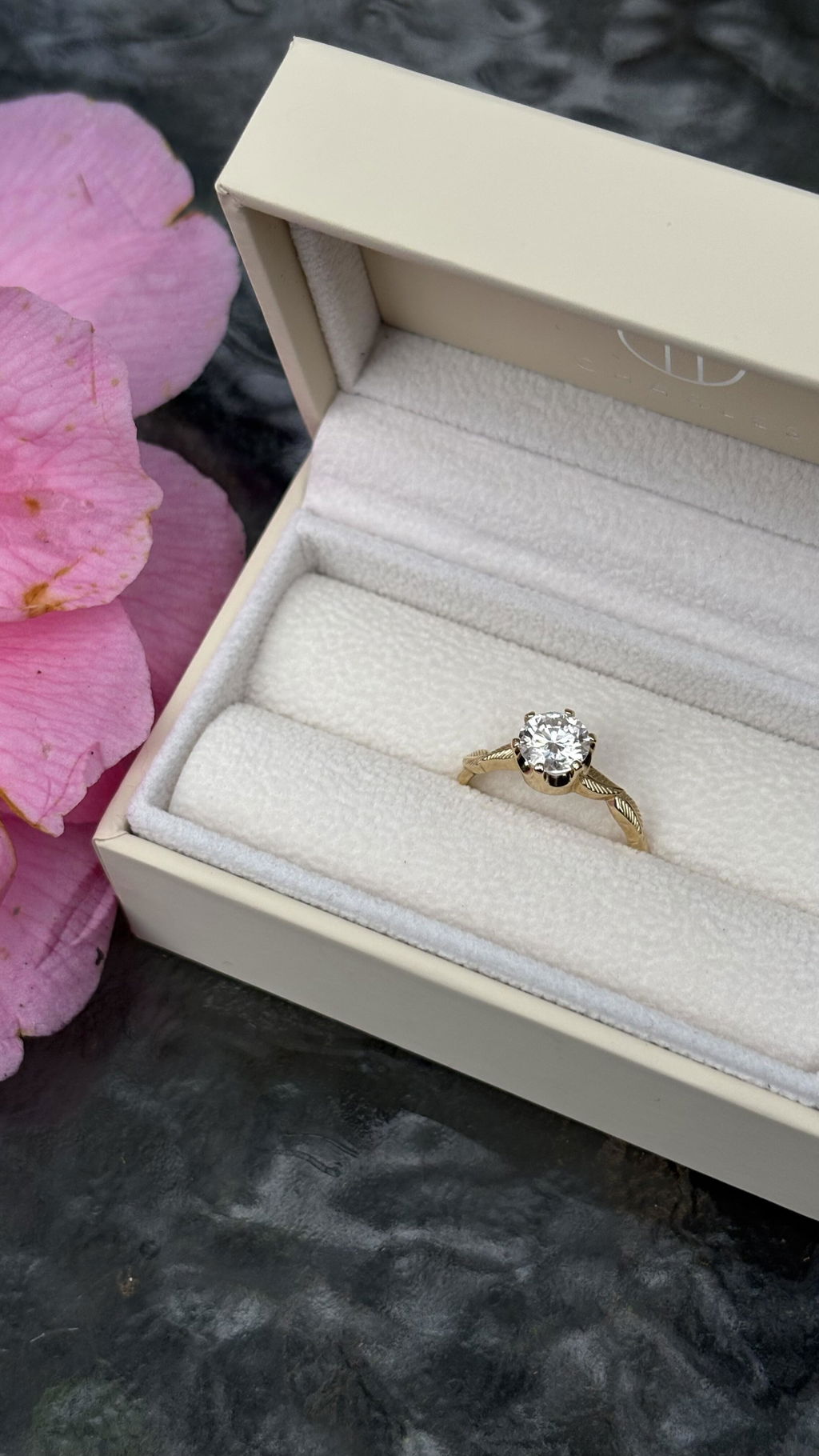


Key Takeaways
- Ranking: a recycled or antique stone comes first because no new mining is needed. Lab-grown diamonds, lab-created gemstones and moissanite follow.
- Australian sapphires: a sapphire is still a mined gem, but Queensland and New South Wales stones offer a shorter, more traceable supply chain.
- Greenwashing: "conflict free" and "ethical" do not guarantee a low environmental impact, so ask where every stone came from.
- Our approach: we use recycled gold and lab-grown stones, plant five trees with every order and handcraft each ring in Perth.
How We Rank Eco-Friendly Engagement Ring Gemstones
You want a ring that carries a story you are proud of. The jewellery industry uses a lot of green language, so in this guide we look at how each stone is sourced and rank sustainable engagement rings by their likely impact.
This ranking is our own and is based on how a stone reaches you, not on a formal lifecycle study. We looked at five things:
- Earth moved: how much ground is dug up to find a single carat.
- Water use: how much water extraction or growing needs.
- Transport: how far rough stone travels to be cut and polished.
- Energy: what power is used to grow or process the stone.
- Traceability: whether a jeweller can show you where the stone came from.
The Ranking: From Lowest to Highest Impact
Here is how the main options compare. For a ring-by-ring view, see our guide to the top sustainable engagement rings.
| Rank | Stone | Why it ranks here | Question to ask |
|---|---|---|---|
| 1 | Recycled or antique stones | The stone already exists, so no new mining is needed. | Can you show where this stone came from? |
| 2 | Lab-grown diamonds | Grown in a lab, so no earth is dug up to find them. | What energy powers the lab? |
| 2 | Lab-created gemstones and moissanite | Also grown in a lab rather than dug from the ground. | Is the stone certified or hallmarked? |
| 4 | Australian-mined sapphires | Mined, but with a shorter, more traceable supply chain. | Which region and mine did it come from? |
| 5 | Imported mined stones | Longer supply chains are harder to trace. | Can you trace it back to the mine? |
Why Recycled Stones Rank First
You cannot beat zero new mining. Reusing a stone that already exists means no new holes, no heavy machinery and no new rough material crossing the globe. It is the lowest impact choice, even though it is not the right fit for every couple.
Most couples want a stone chosen for their ring, which is where the next group comes in.
Why Lab-Grown Stones Sit Near the Top
Lab-grown stones are grown in a controlled environment, so no earth is dug up to find them. Our lab diamond engagement rings and moissanite engagement rings give you a traditional sparkle without a mine behind it. Moissanite used in jewellery today is almost exclusively lab-grown.
Growing a crystal does need electricity, so there are two points to keep in mind:
- Energy source: ask any jeweller how their lab-grown stones are made and what powers the process.
- Proof: every piece we make is hallmarked, and certification is normally provided on diamonds over 0.50 carats.
Where Australian Sapphires Fit
A natural sapphire is a mined gem, so it comes with environmental and human impacts. We do not claim otherwise. Australian-mined stones from Queensland and New South Wales offer a shorter, more traceable supply chain than many imports, which is why they rank above imported mined stones.
If you love the colour of a sapphire but want the lowest impact, a lab-created sapphire avoids mining altogether. Browse our sapphire rings and ask us about the origin of any stone.
Dodging the Greenwashing Trap
Many brands put a green leaf on the box and call it done. Keep your guard up for these phrases:
- Conflict free: this means a diamond did not fund conflict. The Kimberley Process aims to keep conflict diamonds out of the supply chain, but it says nothing about land use, water or energy.
- Ethical: brands use this word loosely, so ask for facts about the stone and the metal instead.
- Sustainable: look for a clear reason, such as recycled metal or a lab-grown stone, not just the word.
Questions to Ask Your Jeweller
A reputable jeweller will be happy to answer any question about sourcing. Use these to compare, and see how we answer them:
| Question to ask | Our answer at Vinny & Charles |
|---|---|
| Where was the ring made? | We handcraft every ring in our Perth workshop, made to order. |
| What metal is used? | Recycled gold, so new gold does not have to be mined for your ring. |
| Where do the stones come from? | We design with lab-grown gemstones and diamonds, and any natural diamonds follow the Kimberley Process. |
| Can I see paperwork? | Every piece is hallmarked, and certification is normally provided on diamonds over 0.50 carats. |
If a jeweller gives vague answers about global suppliers, that is a sign to keep asking. Our guide to choosing an ethical engagement ring goes deeper on this.
What We Do at Vinny & Charles
We are a husband and wife team, and we believe our passion and craft should not take from the environment. Our ethical practices include:
- Recycled gold: we use recycled precious metals to reduce the consumption of natural resources.
- Lab-grown stones: we design with lab-grown gemstones and diamonds.
- Five trees per order: we plant five trees with every order, and a customer review adds another five.
- Monthly giving: since 2020 we have contributed monthly to similar programs to offset our impact.
Frequently Asked Questions
What is the most eco-friendly engagement ring stone?
A recycled or antique stone is the most eco-friendly choice, because no new mining is needed. After that come lab-grown diamonds, lab-created gemstones and moissanite, which are grown in a lab rather than dug from the ground. Whichever stone you choose, ask your jeweller to show where it came from.
Are lab-grown diamonds really sustainable?
They avoid mining, so no earth is dug up to find the stone. They do use electricity to grow, so the energy source matters. We suggest asking any jeweller how their lab-grown stones are made, and we are happy to talk through the stones we use.
Is a sapphire an eco-friendly engagement ring stone?
A natural sapphire is mined, so it has environmental and human impacts. Australian-mined stones from Queensland and New South Wales offer a shorter, more traceable supply chain than many imports. For the lowest impact, a lab-created sapphire avoids mining altogether. Ask for the origin of the stone either way.
Does conflict free mean a diamond is eco-friendly?
No. Conflict free means a diamond did not fund conflict, and the Kimberley Process aims to keep conflict diamonds out of the supply chain. It says nothing about land use, water or energy. We follow the Kimberley Process for any natural diamonds, and we also ask about origin.
Browse Ethical Engagement Rings or Design Your Own
Finding a beautiful ring should not compromise your values. Browse our ethical engagement rings and add the one you love to your cart, or tell us about a custom design.
Call us on +61 8 6323 8494 to make an appointment with Melody and Chris. As Joshua Fairman said after his custom ring, Melody "went above and beyond in the creation of the ring."