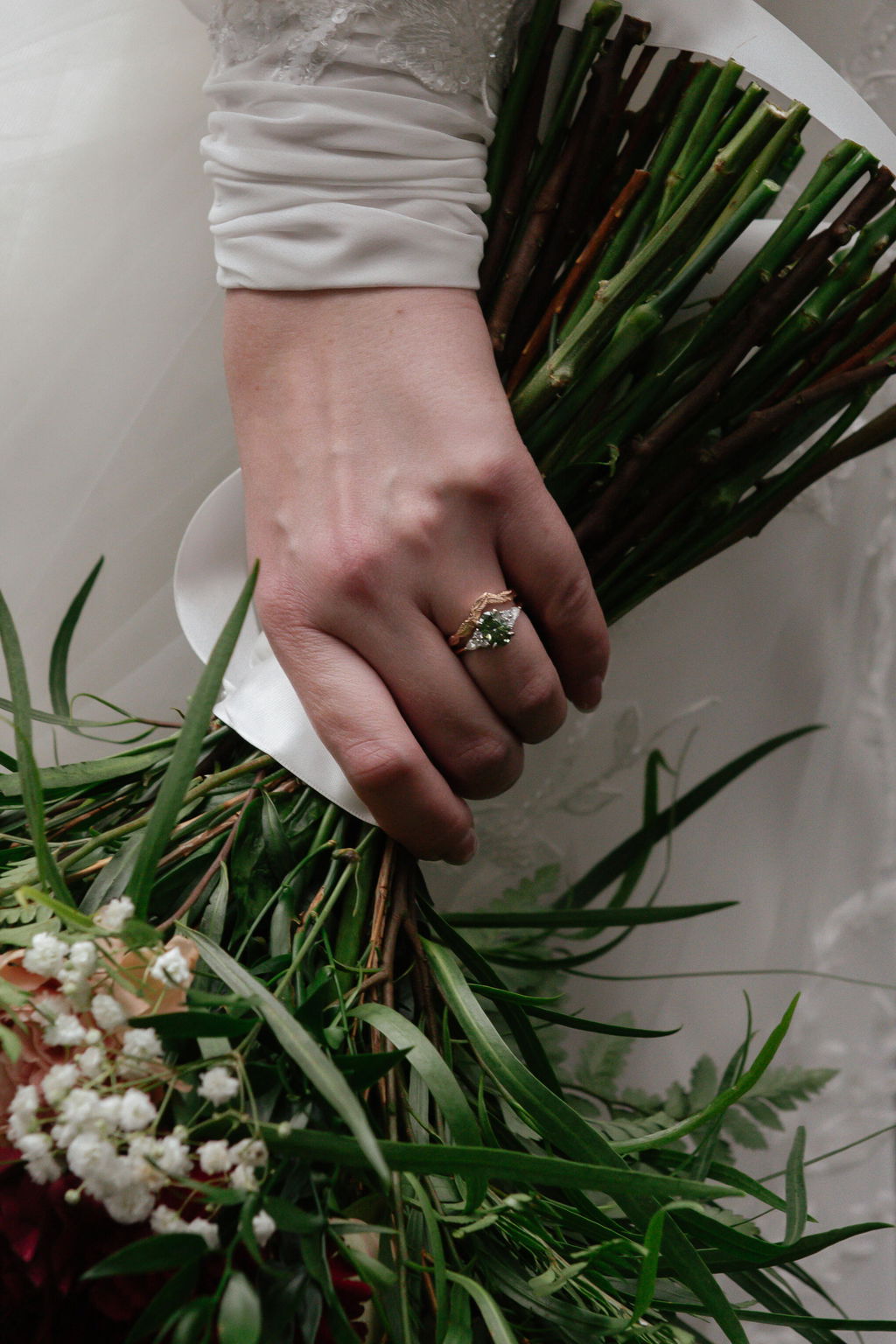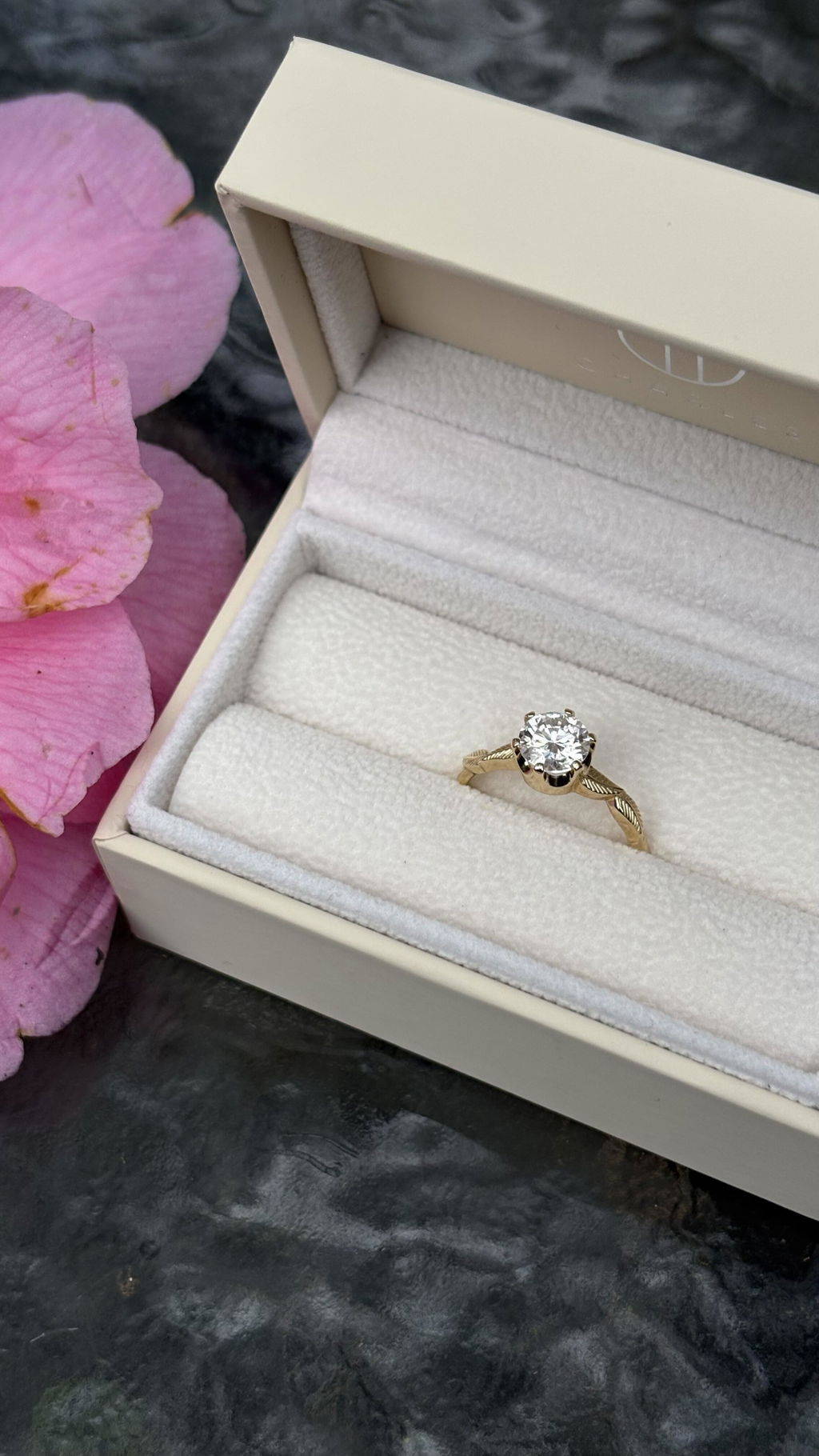


When you admire the smooth finish and brilliant sparkle of a moissanite ring, you’re seeing the result of many precise and carefully executed steps. Creating a moissanite ring demands expertise, patience and a steady hand. Every detail—from how the stone is secured to how the metal is polished—contributes to its final beauty.
Below, we take you behind the scenes to explore how jewellers bring moissanite rings to life, ready to be worn and cherished.
Preparing the Setting
The process begins long before the stone is placed. The setting must be expertly prepared so it can hold the moissanite securely for years to come.
Depending on the design, the jeweller forms or casts the head (or collet) that will cradle the stone. The band and head are often soldered together and partially filed to ensure clean, strong joins. This ensures the structure is solid enough to withstand daily wear without bending or loosening.
Each type of setting requires different preparation:
- Prong settings: The prongs are shaped but left slightly larger so they can be trimmed and refined after the stone is set.
- Bezel settings: A smooth metal rim is crafted to wrap around the stone’s edge.
- Channel settings: Grooves are precisely cut so the stone fits tightly without weakening the metal.
Setting the Moissanite
Once the metalwork is ready, the stone is placed. A skilled setter works under magnification to align the moissanite perfectly—centred, symmetrical and balanced with the rest of the ring.
Different settings require different techniques:
Prong Settings: Each prong is carefully bent over the stone and tightened little by little to avoid excessive pressure, which could cause cracks. Once secure, the prongs are trimmed, shaped and smoothed.
Bezel Settings: The metal rim is slowly pushed over the stone’s edge until it holds the moissanite firmly in place. Bezels offer exceptional protection, making them ideal for everyday wear.
Channel or Pavé Settings: These often involve placing multiple small stones side by side. Each is held with tiny beads or micro-prongs. Because this work requires delicate micro-adjustments, it is performed entirely by hand.
Moissanite is durable, but like all gemstones, it must be handled carefully. Its internal structure means excess force or uneven pressure can cause damage, making the setter’s skill essential.
Correcting and Refining
After the stone is secured, the jeweller inspects the ring for any imperfections—tool marks, uneven prongs, misalignments or rough edges. Corrections are made immediately, whether that means adjusting prongs, evening out the setting or refining angles.
A light pre-polish is often done at this stage to smooth out marks created during setting. The ring is then cleaned to remove dust, oils or microscopic metal particles.
Finishing: Polishing, Texturing and Final Touches
The finishing stage transforms a functional piece into a polished work of art. Jewellers use a series of polishing wheels, progressing from coarse to fine compounds, to create a flawless shine.
Hand polishing remains the preferred method because it offers maximum control, especially on delicate details. Some designs incorporate mixed finishes for added personality:
- Brushed or satin textures
- Hammered or micro-blasted finishes
- Fine hand engraving
For intricate designs or areas that are hard to reach—such as filigree or openwork—electro-polishing or precision machines may be used. This ensures smoothness without damaging tiny details.
Once the polishing is complete, the ring is thoroughly cleaned—typically using steam or ultrasonic methods—to remove every trace of polishing compound or debris.
Time to Wear It Proudly
After all the shaping, setting, polishing and refining, your moissanite ring is ready to shine. Knowing how much craftsmanship goes into each piece makes wearing it even more meaningful.
At Vinny & Charles, every ring is handmade in small batches with care and intention. Browse our full moissanite collection, or contact us to create a custom design that tells your unique story.